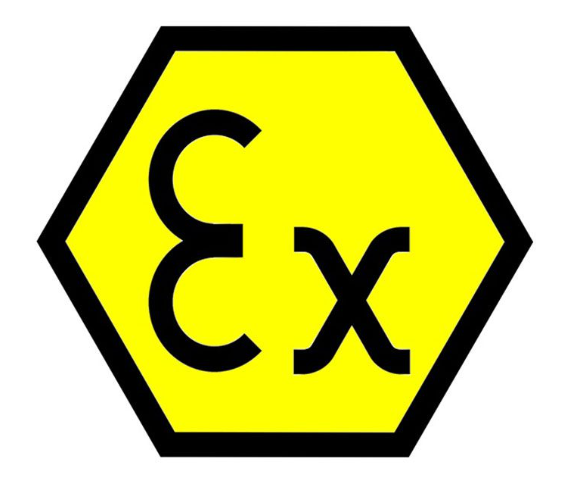
Explosive atmospheres are not the exception – they occur in dozens of industries where certified components are a necessity.
The abbreviation ATEX comes from the French ATmosphères EXplosibles – explosive atmospheres. It refers to a set of European regulations laying down safety requirements for equipment and workplaces in areas where an explosive atmosphere may occur.
An explosive atmosphere forms when air mixes with flammable gases, vapours, mists or dust in such a ratio that all it takes is an ignition source – a spark, a hot surface or an electrostatic discharge – for an explosion to occur.
For manufacturers and operators of industrial equipment, ATEX has clear legal consequences: all electrical and non-electrical equipment intended for hazardous zones must comply with Directive 2014/34/EU (in the Czech Republic, Government Regulation No. 116/2016 Coll.), have an EU Declaration of Conformity and bear the CE marking and the Ex mark. Electrical equipment of categories 1 and 2 additionally requires certification by a notified body.
ATEX Equipment Directive – obligations of manufacturers. Defines requirements for the design, manufacture and certification of equipment intended for use in potentially explosive atmospheres.
Czech legislation – Government Regulation No. 116/2016 Coll. transposes Directive 2014/34/EU into Czech law.
ATEX Workplace Directive – obligations of employers. Requires the classification of hazardous zones, risk assessment and the protection of workers.
Czech legislation – Government Regulation No. 406/2004 Coll. transposes Directive 1999/92/EC into Czech law.
IEC international certification scheme – a global system for certifying equipment for use in potentially explosive atmospheres, recognised in many countries outside the EU (e.g. Australia, Asia, the Middle East).
Hazardous areas are classified into zones according to the likelihood of an explosive atmosphere occurring. Each zone requires equipment of the corresponding category. The hours per year given are indicative only.
Every device for explosive atmospheres carries a code on its rating plate that states exactly where and under what conditions it may operate.
I = mines, II = all other environments with explosive gases and dusts.
The number defines the zones the device may be used in: 1 zone 0/20, 2 zones 1 and 2 (21 and 22), 3 zone 2 (22) only. The letter G = gases, D = dust.
How the device prevents an explosion: d flameproof enclosure, e increased safety, i intrinsic safety, m encapsulation, t protection by enclosure against dust, h non-electrical equipment.
Gases by spark ignitability: IIA (e.g. propane, methane, acetone), IIB (ethylene, hydrogen sulphide), IIC (hydrogen, acetylene). IIC equipment is the strictest and may also be used for IIA and IIB – not the other way round. Dust: IIIA combustible flyings, IIIB non-conductive, IIIC conductive dust.
The maximum surface temperature of the device – see the scale below. For dust, the temperature is stated directly in °C instead of a class (e.g. T80 °C).
Ga/Da for zone 0/20, Gb/Db for zone 1/21, Gc/Dc for zone 2/22. A newer equivalent of the equipment category.
| Category | Gases | Dust | Explosive atmosphere |
|---|---|---|---|
| 1 1G / 1D | zone 0, 1, 2 | zone 20, 21, 22 | permanently or frequently |
| 2 2G / 2D | zone 1, 2 | zone 21, 22 | occasionally in normal operation |
| 3 3G / 3D | zone 2 | zone 22 | rarely and briefly |
Highlighted categories are covered by Schischek: Ex versions (category 2) and Red versions (category 3).
The device must have the same or a stricter class than required by the substance in operation – e.g. hydrogen T1, acetylene T2, hydrogen sulphide T3, carbon disulphide T6. A T6 device is therefore suitable everywhere.
Actual marking of the ExRun actuator: II 2G Ex db eb IIC T6 Gb for gases and II 2D Ex tb IIIC T80 °C Db for dust.
Most Schischek products are made in three versions with the same function – they differ only in the environment they are intended for.
Full explosion protection, category 2G/2D. For areas where an explosive atmosphere may occur even in normal operation.
ExMax, ExRun, ExCos, ExBin, ExReg…View products RedZones 2 and 22 onlyA more economical version with the less strict category 3G/3D. For areas where an explosive atmosphere occurs only rarely and briefly, typically in the event of a fault.
RedMax, RedRun, RedCos, RedBin…View products InNo explosion riskThe same design and function without Ex certification. For normal environments outside hazardous zones.
InMax, InRun, InCos, InBin, InReg…View productsSchischek does not offer products for zones 0 and 20.
Explosive atmospheres are not rare – we encounter them in many ordinary industrial operations.
Schischek offers solutions for zones 1, 2, 21 and 22.
A closer look at the industries where Schischek actuators and sensors are most often used.
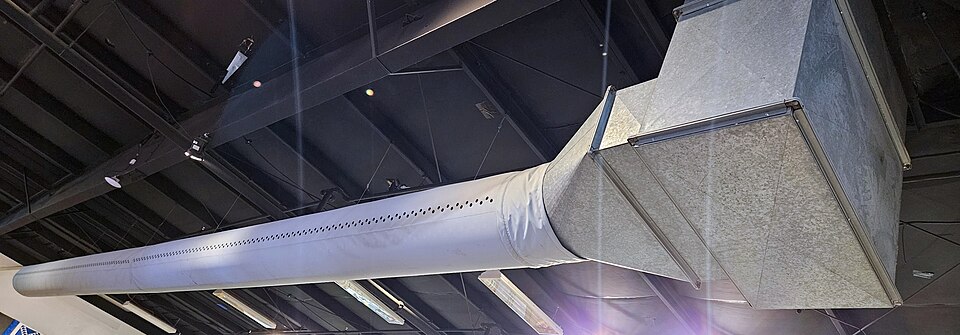
Since its foundation, Schischek has focused primarily on the HVAC sector. Its actuators and sensors are designed to control dampers and valves in ventilation systems installed in potentially explosive atmospheres.
Typical applications include controlling supply and extract air in chemical laboratories, paint shops, production halls with flammable vapours and stores of flammable substances. The products are fully compatible with building management systems (BMS) from leading manufacturers.
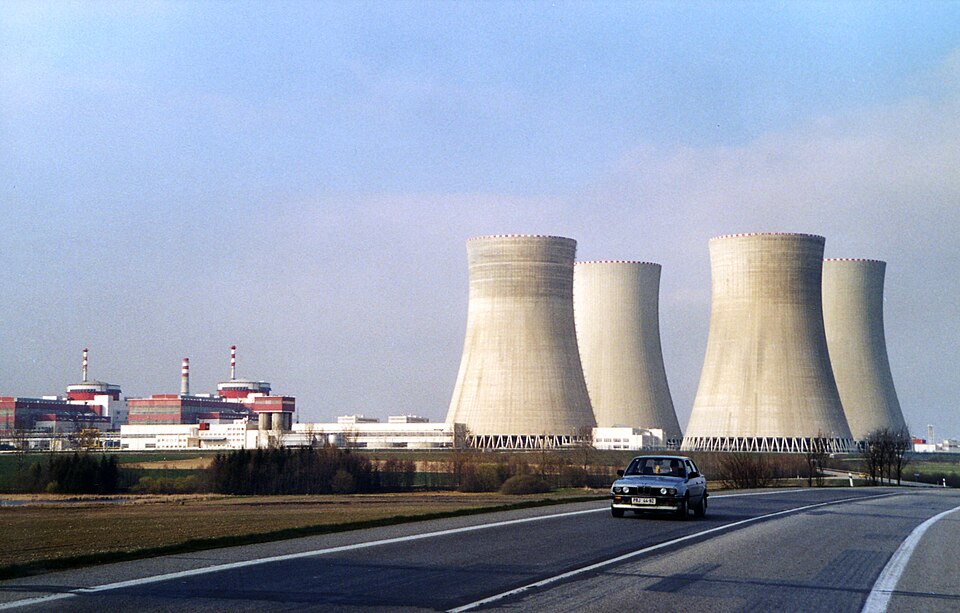
Wastewater treatment plants produce biogas (a mixture of methane and CO₂) during anaerobic sludge treatment. Digesters, sludge tanks and gas handling facilities are classified as Ex Zone 1. Schischek actuators operate the shut-off and control valves in these areas.
In the energy sector, the products are used in biogas plants, gas-fired power plants and natural gas compressor stations. ExRun linear actuators (500–10,000 N) control the control valves here.
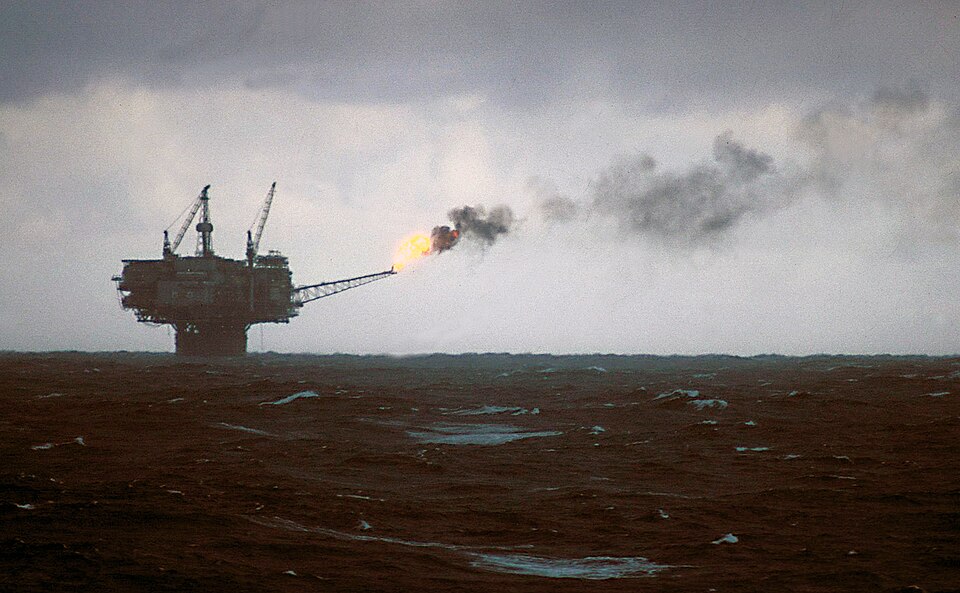
Drilling platforms, FPSO vessels, LNG terminals and onshore refineries are the most demanding environments for electrical components. The presence of hydrocarbons combined with a salty marine atmosphere places extreme demands on tightness, corrosion resistance and the speed of the fail-safe function.
ExMax actuators in an all-stainless-steel version (AISI 316) and ExRun with a stainless steel weather protection cover are certified for Zones 1 and 2. Fast variants with a spring return close in approx. 1–3 s. With the ExPolar heating system they operate down to –50 °C, and on request with the ExArctic heating system down to –60 °C; the upper limit is +60 °C.
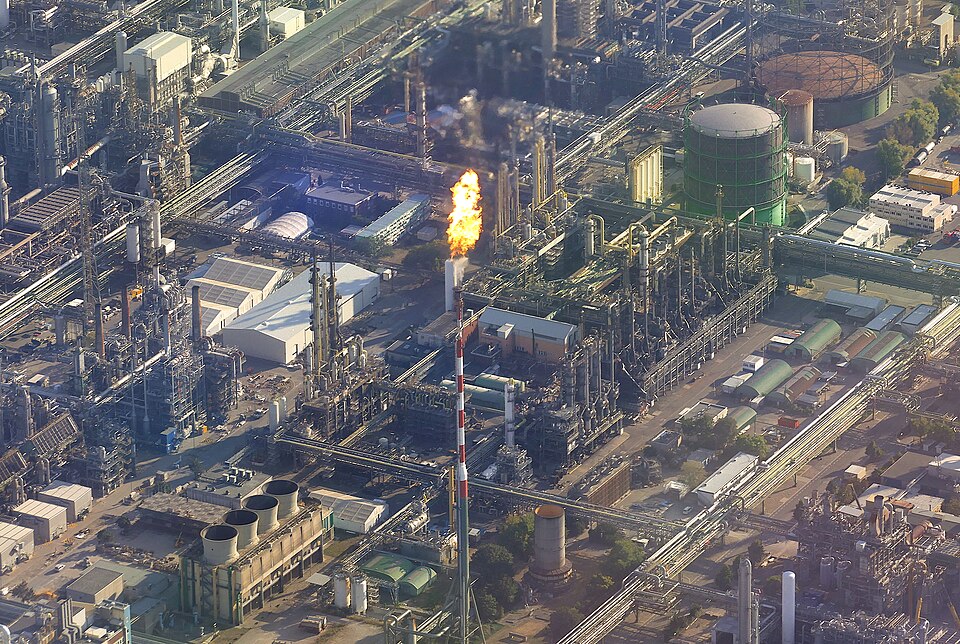
Chemical plants, pharmaceutical production sites and automotive paint shops have a common denominator: their production processes handle flammable substances that form explosive atmospheres. Entire production halls or parts of them are classified as Zone 1 or 2.
Ventilation control systems in these facilities must be certified for the zone in question. Schischek actuators have a maintenance-free design and are built for long-term reliable operation.
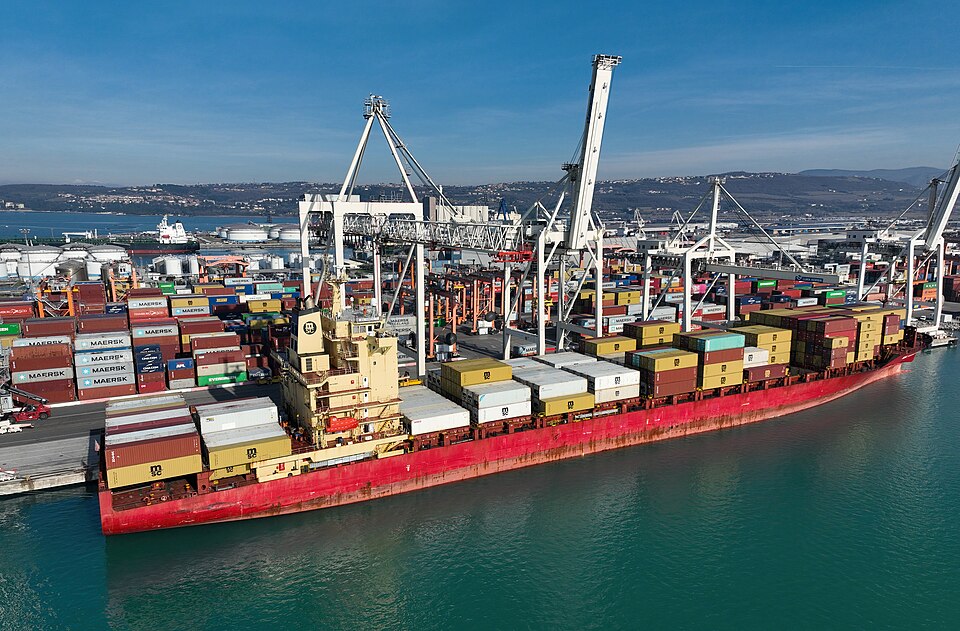
Ships, ferries and port terminals combine areas with a risk of explosion – engine rooms, tankers and transhipment points for flammable cargo – with a permanently aggressive salty atmosphere. Equipment here must withstand corrosion, vibration and extreme weather fluctuations.
For these applications, the actuators are supplied with a special protective coating or in an all-stainless-steel version (AISI 316). The solutions build on Schischek’s many years of experience with offshore installations.
Photos: Wikimedia Commons –Eric Polk (CC BY-SA 4.0), IAEA Imagebank (CC BY-SA 2.0), Hannes Grobe (CC BY 3.0), Rolf Kickuth (CC BY-SA 4.0), Petar Milošević (CC BY-SA 4.0).
Schischek products are certified for Ex Zones 1, 2, 21 and 22 to both ATEX and IECEx. For Zones 1, 2, 21 and 22 we have solutions for most applications in HVAC and industry.

 EN
 CZ
 SK